When it comes to pet weight management it can feel tricky to find the right balance. You want to feel as though you can give your pet treats and let them enjoy themselves, but it should never be at the detriment of their health.
Whilst pets tend to be energetic and burn a lot of calories through play and exercise, being aware of what you’re feeding them and how this can affect their wellbeing is important. Also in dogs for example, older dogs or more docile breeds (such as Bulldogs or Basset Hounds) tend not to engage in much daily exercise meaning they won’t burn excess calories as easily.
As such, keeping an eye on your pets weight whilst still being able to treat them every now and then is the best approach.
At Cura, we’re a vet-owned and vet-run online pharmacy offering a range of prescription and non-prescription products, alongside a range of pet toys and accessories. We love your pets as if they were our own, so you can be confident the advice you’re receiving has your furry friend’s best interests at heart.
Benefits of Pet Weight Management
Pet weight management is important for many reasons as it allows your pet to live a happier and healthier life, even extending their lifetime by helping prevent avoidable health issues linked to excess weight.
We know that pets tend to love food – as soon as they hear the fridge door opening they’re excited! Whilst it’s tempting to feed your pet treats and even some human treats, it’s important to be aware of how extra calories and unsuitable foods can lead to unhealthy weight gain.
Other reasons why pet weight management is important are:
- Improves their general quality of life including their mobility (particularly important for older pets or larger animals such as horses)
- Supports their metabolism meaning they can maintain their energy for longer
- Reduces the likelihood of long-term health conditions developing such as arthritis, diabetes, respiratory concerns, and diabetes
- Helps pets stay active and engaged in everyday activities and play, which in turn, is important for their overall happiness and wellbeing
- Lowers strain on their bones and muscles which can lead to conditions such as arthritis or joint problems
- Can extend their lifespan as they will be able to move more and engage in activities. A good point to remember is that ribs should be easily felt but not seen (as this can also indicate that a dog is too thin)
Why Do Pets Become Overweight?
There are lots of reasons why pets become overweight and some can happen without you immediately realising it. For example you might not be aware of how much you’re feeding your pet as they might be looking at you as if they’re still hungry so you give them another portion.
However whilst this might satisfy their appetite, it can quickly lead to them consuming a lot more calories than they should be in a day. Let’s explore some of these in more detail below.
Overfeeding
Overfeeding is one of the most common reasons why pets put on weight as it’s easy to give them too much food without realising.
Pets have a tendency to look at us as though they’re still hungry and they’ll rarely refuse extra food unless they’re poorly. They’re instinctual animals so they’ll often eat whenever food is offered, even if they don’t truly need it.
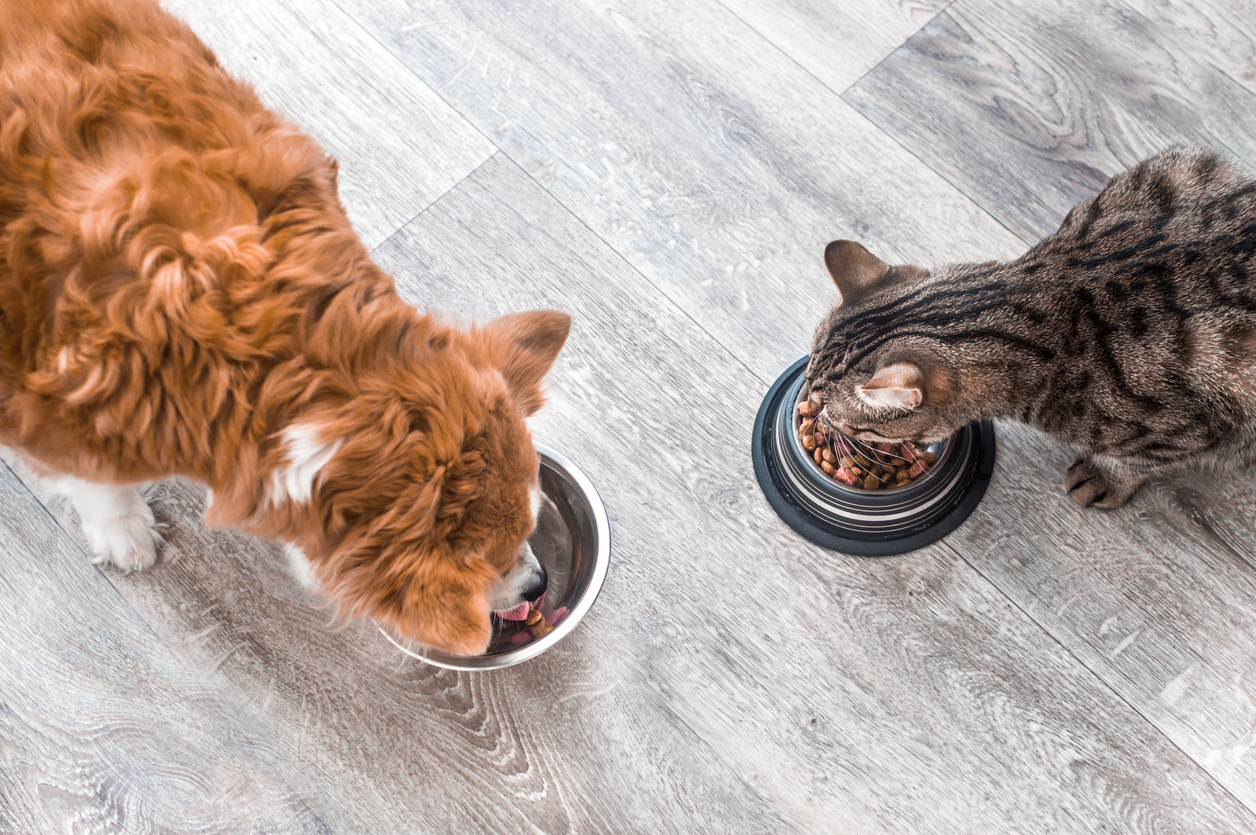
The best way to ensure you’re feeding them the right amount is to find out how much food they need for their weight. You should know your pet’s weight regardless of whether you have a dog, cat, or horse as this helps you avoid over or under feeding them. From this point you can work out how much food they should be eating, and often it’s stated on the back of the food box / bag.
Lack of exercise
The amount of exercise a pet needs varies depending on what type of pet it is, their age, and their breed.
Let’s start with small animals.
Small animals
As small animals such as rabbits and guinea pigs move freely around their cage or enclosure, this tends to be enough exercise on an average day. As long as you’re providing a secure area for them to explore, this should be sufficient.
Dogs
The amount of exercise a dog needs varies heavily on their breed and age. For example, whilst 30-60 minutes is often the overall recommended amount, energetic breeds such as retrievers and spaniels might need 1-2 hours.
The age of your dog is also important as older dogs are more suited to shorter walks with less impact as this reduces any strain on their muscles. At the opposite end of the scale are puppies who require short bouts of exercise – often 10 to 15 minute walks.
Cats
Cats typically need around 30 minutes of interactive play. Consider using toys such as feather wands and bells toys to encourage participation and movement. Also if your cat goes outdoors, this will also support the amount of exercise they’re getting.
Horses
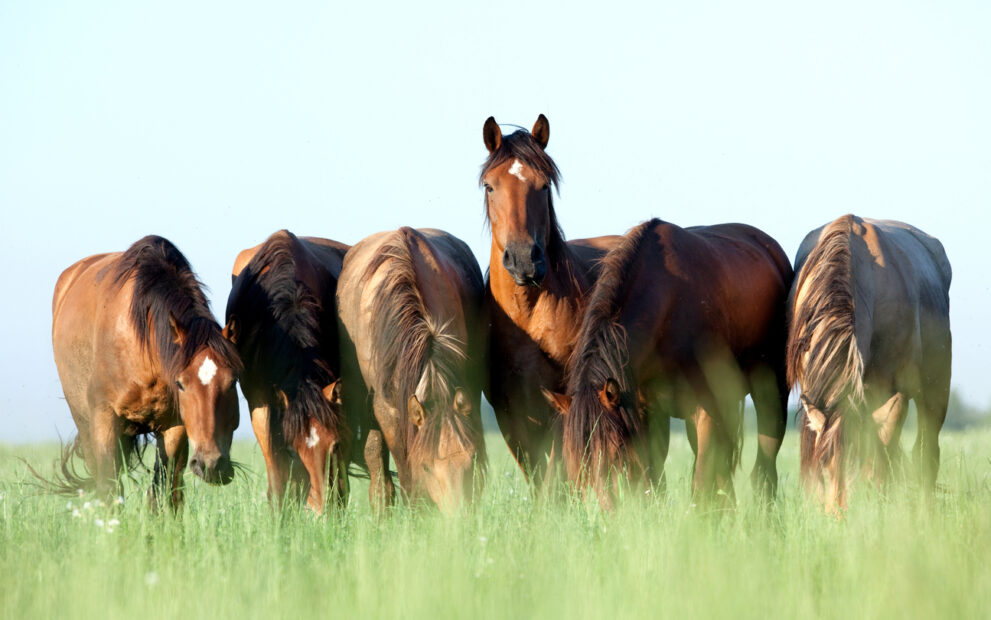
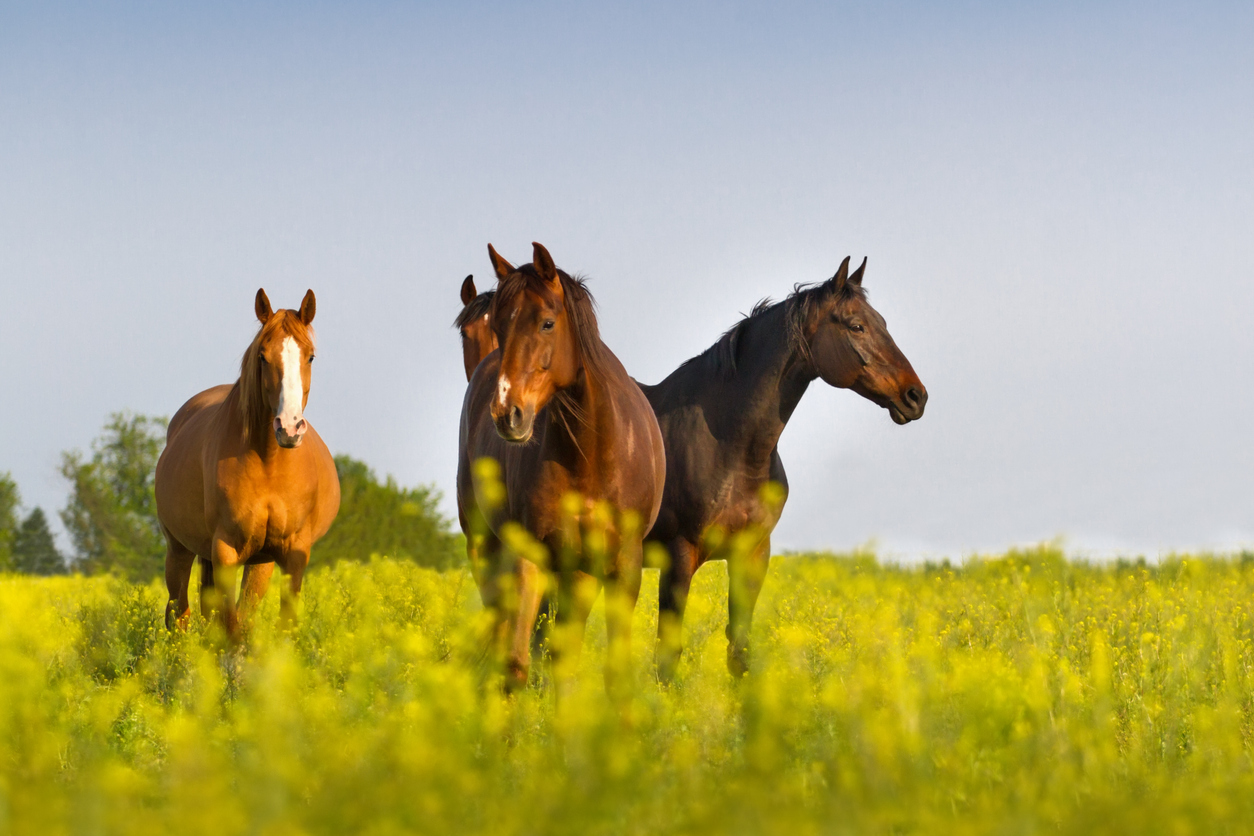
Horses typically need around 60 minutes of exercise a day which includes walking and trotting. However the exact amount again depends on their breed and age and they should be encouraged to exercise, otherwise they’ll more than likely hang around waiting to be fed!
For context, wild horses can cover up to 50 miles in a day when walking between different water sources. Whilst this isn’t achievable or recommended for domesticated horses, it’s still important your horse is kept active and engaged. Two tips for encouraging exercise in a horse is to let them out in groups. This ensures they get steady exercise to keep their bones healthy, and regular movement also helps their circulation by naturally pumping blood and fluids up from their legs.
Another tip is spacing out their hay so they can walk around whilst grazing.
Shop Pet Healthcare Products
Find a range of healthcare products, designed to keep your pets health and happy.
Medical conditions
Medical conditions such as hypothyroidism in dogs or mobility problems can make pets more likely to gain weight. This limits their ability to freely exercise and move around, which in turn, means they store the calories instead of burning them off.
Even arthritis pain can lead to reduced activity, causing gradual weight gain. If you notice sudden changes in your pet’s weight, it’s important to speak to your vet.
Age
Just like humans, a pet’s energy naturally drops as they age meaning they’re less likely to run about as much as they did before. As they’re less active, they burn fewer calories throughout the day as they might spend more time sleeping or lounging around the house.
Also older pets, whether that’s dogs, cats, or horses, often need fewer calories than they did when they were younger as they’re not maintaining the same energy levels. This makes it important to adjust their diet in line with their lifestyle, ensuring they’re not consuming more calories than they really need.
Furthermore, dogs in particular lose muscle mass called sarcopenia as they age, which means they burn fewer calories and their metabolism naturally slows down.
"Obesity is a clinical condition seen in all animals. It can have significant physiological, health and welfare complications for the animal and therefore so important that we try to avoid our animals becoming overweight or obese. It can be challenging for owners to manage weight loss in their animals, but asking for help from your vet practice would be something I would highly recommend. Many vet practices run weight loss clinics for their clients which can be so helpful. Having 2 dogs of my own that LOVE treats, it is definitely getting harder to maintain their healthy weights as they get older and are exercising and playing less, so I completely understand how pet owners feel as the weight of their pet creeps up slowly! Unfortunately less treats is required for both of them - much to their dislike! "

What Can Owners Do To Support Weight Management
There are lots of things you can do to help manage your pet’s weight, including giving them smaller portions that align with their recommended daily intake, and also making them work a little for their food.
This can in turn create a game which requires movement and interaction to encourage them to burn extra energy while keeping mealtimes more fun. Some ideas for games include slow feeders and KONG toys where they need to sit and figure out how to release the food, turning mealtime into a simple puzzle. For cats, try smaller portions placed around the house to place their meal higher up (such as a secure climbing tree) so they have to work a bit harder.
Another idea is to engage your pet in play, which not only increases the amount of calories they’re burning but also strengthens the owner-pet bond. When it comes to dogs some prefer a game of fetch whereas others prefer tug-of-war; both get them moving moe and increase their metabolic rate.
The Health Benefits of Pet Weight Management
Pet weight management is one of the most important parts of being a pet owner. Whilst giving your dog treats is an important part of rewarding them and strengthening your bond, it’s important you don’t overdo it.
The simple tips discussed in this blog are easy ways to keep your pets weight under control, ensuring they continue to lead healthy and happier lives for years to come. We all want our pets to be happy and to live as long as possible. Some simple changes such as reducing their food intake or exercising them for 30 minutes extra a day, can make a huge difference.
At Cura, we care for your animals as if they were our own. As a vet-owned and run online pharmacy, we provide both prescription and non-prescription veterinary medicines for a wide range of animals, so you can trust that our guidance is trustworthy. You can shop our range of products below.
Shop Pet Healthcare Products
Find a range of healthcare products, designed to keep your pets health and happy.